
From the womb to the world: Supporting the MotherBaby, early breastfeeding

“A newborn baby has only three demands. They are warmth in the arms of its mother, food from her breasts, and security in the knowledge of her presence. Breastfeeding satisfies all three.” -Grantly Dick-Read
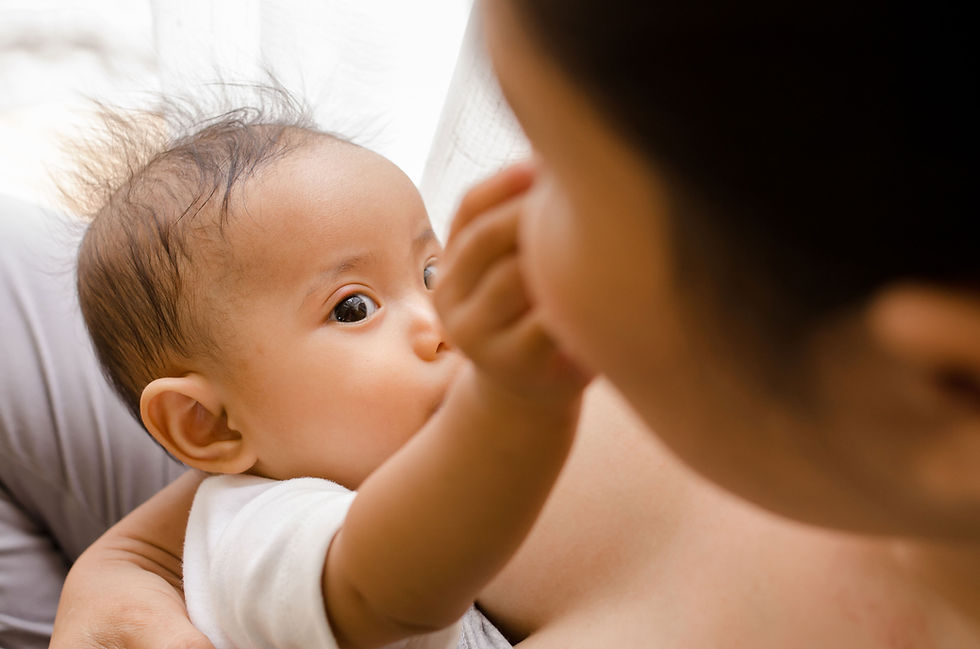
Breastfeeding is the normal way of providing your baby with the perfect nutrients to aid in brain and body development. It can reduce the impact of infection and provide special protection for premature or ill infants. For the mother it can help reduce the risk of breast and ovarian cancers and can help reduce the risk of postpartum depression. Breastfeeding can support families by being cost effective, decreasing health care cost and it leaves a small environmental footprint. Breastmilk is species specific, the composition changes over time to meet the needs of the baby. Colostrum, the early milk, provides highly dense nutrients, has a laxative effect, is high in immunoglobulins and lactose. There is a feedback loop between mother and baby, as baby’s saliva sends a message to mom’s body to produce the kind of milk he/she needs. Remember that breastfeeding is not just a product but a process.
Most mothers can breastfeed, provided they have accurate information, the support of their family, the health care system and society at large. Almost 90% of women start out after birth wanting to breastfeed but by 6 months it has dropped to around 30%. Getting breastfeeding off to the best start goes a long way to continuing your breastfeeding journey.
During pregnancy your body is beginning to prepare for breastfeeding. Hormones, glandular tissue growth and milk producing cells all contribute to the preparation. Your body and baby are meant to transition from placental feeding to breast feeding. In the first hour after birth, often called “the golden hour”, supporting the mother in being skin to skin with baby can help to colonize baby’s gut with good bacteria, provide protection and immunity to dis-ease. Without interruption a baby will do “the breast crawl”, smell, lick, massage and with instinctual reflexes latch on to mom.
Beginning from birth the motherbaby breastfeeding relationship begins. A mother's active participation in childbirth can influence what happens during birth and can impact her wellness during the postpartum year. When a mother is awake, aware, and actively involved she is better able to avoid procedures or interventions that can compromise the initiation of breastfeeding. A difficult labor or medications used may make the baby sleepy for several days or decrease the effectiveness of the baby's suck and can affect a mother's self-confidence and well-being.
To support baby-led feeding remember to feed early and often. Newborns may feed every 1-3 hours in the first week, day and night. Position and latch are important to help baby and mom be comfortable and to establish effective nursing. Your will spend a lot of time looking at your newborn and will start to learn her hunger cues. When exclusively breastfeeding do not introduce any artificial nipples as it is being established. Well meaning friends or family may gift you a soother but it can interrupt the learning process. If breastmilk needs to be pumped or expressed, spoon or syringe feeding is a good option.
The motherbaby continue to be dependent on each other from womb to world. Partners, family and friends can surround the mother and baby with love and support as they learn about each other in this new way. Partners can be skin to skin with baby, change diapers, sing to baby, baby-wear and fall in love with their new family. Create an environment where the motherbaby can relax, be nourished and comfortable. We all have a part in supporting new mothers and baby’s on their breastfeeding journey.
Blessings,
Winona


Comments